The butterflies are back on the live oaks, sippin' and hangin' out. This phenomenon seems to happen after rains.
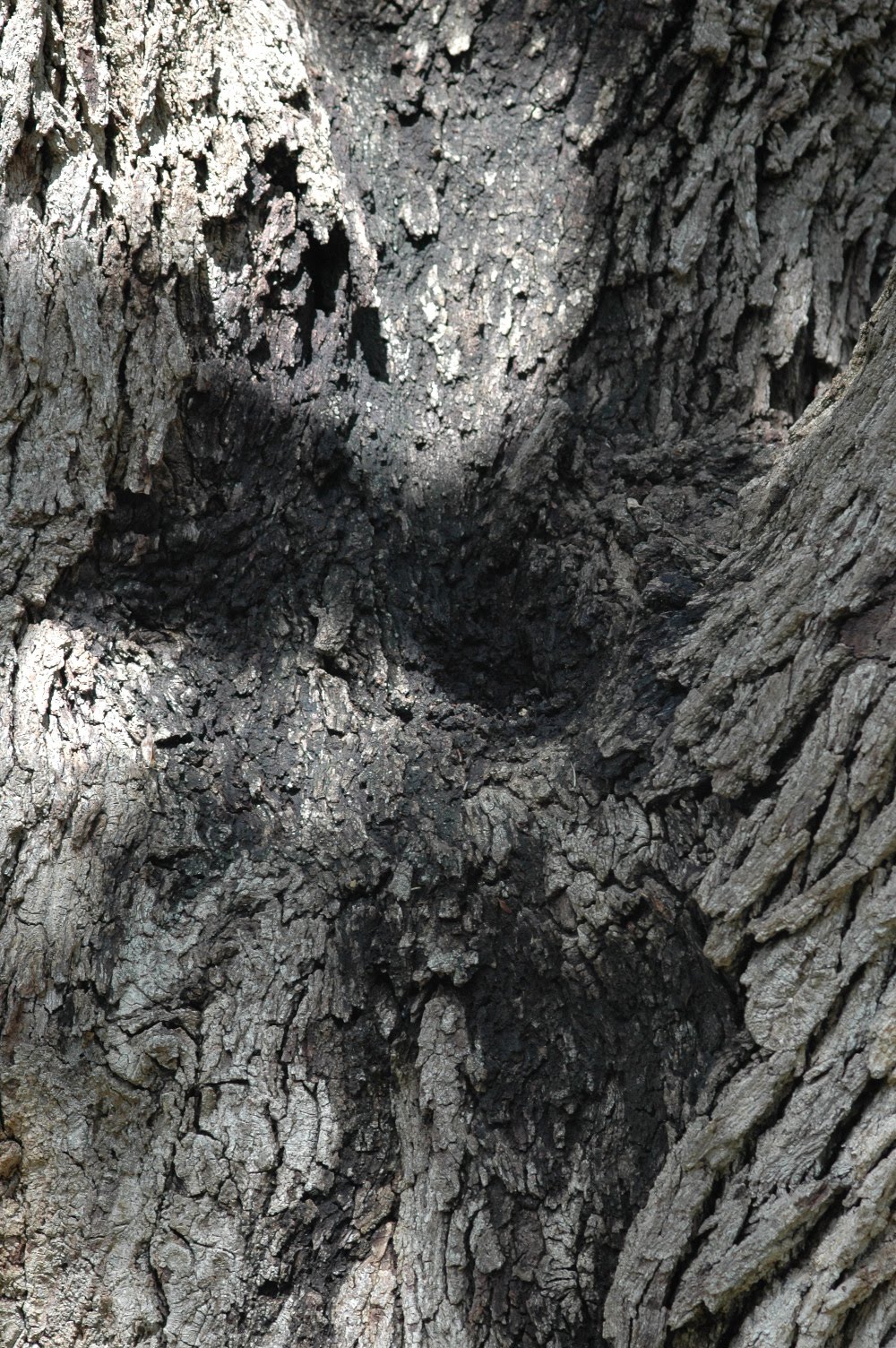
 Take a look below at the photos of a HUGE live oak in the back yard. I got worried again and emailed the pics to our local biologist with the Texas Forestry Service: "I'm sending these photos today so you can look at them when you have time next week. I just noticed THESE awful looking black areas on a different OLD OLD OLD live oak in our back yard. The butterflies are "puddling" at a spot at the base. You already told them that was normal and okay. But these areas have me worried."
Robert Edmonson wrote back yesterday: "It is not a problem. A bacteria is living in the tree and produces that “ooze” just going through its life processes. It is NOT fatal to the tree, it’s really NOT even harmful to the tree and there is NO treatment, plus it’s a food source for butterflies and other insects. Try to ignore the “ooze” and enjoy the butterflies. I understand it is unsightly, it makes a mess and it does smell but it’s not hurting the tree. If I haven’t convinced you, you can hire an arborist to come out and take a look. You can find certified arborists at www.treesaregood.org. I’m just trying to save you some money as an arborist will tell you the same thing as I have."
So again, I feel better about our beautiful live oaks. I just couldn't bear it if we ever lost them.