Wednesday, July 7, 2010

New caterpillars


We noticed them a few days ago on our big common sunflower (formerly a "weed") in the front yard. Yuck. Lots of them. But then I thought I'd go back for a second look today. Here recently, I've gotten more interested in caterpillars because a lot of them, of course, turn into beautiful butterflies. So here goes. I've got my Caterpillars of Eastern North America out, and I'm looking at the index of host plants....they could be silvery checkerspot larvae (Chlosyne nycteis). According to the field guide, these caterpillars are "gregarious, the feeding damage" is conspicuous. That certainly fits! There are masses of these little guys, eating the top layer of the leaves.

And to think we nearly pulled up the 7-foot-high sunflower! (James wanted to do that, not me...shhhh....don't tell him that I tattled on him). I'm so glad we didn't.


Tuesday, July 6, 2010

Mulch pile surprise

Look who I found in the mulch pile this morning! I'm not sure about the species. After a short photo session, I let it go in the compost pile.


UPDATE – From Clint "The Snake Man" Pustejovsky: "This little critter is a nonvenomous rough earth snake. They eat termite larva and slugs for most of their diet." Thanks, Clint!

Coneflower

Coneflower

Saturday, July 3, 2010

More live oak happenin's

The butterflies are back on the live oaks, sippin' and hangin' out. This phenomenon seems to happen after rains.


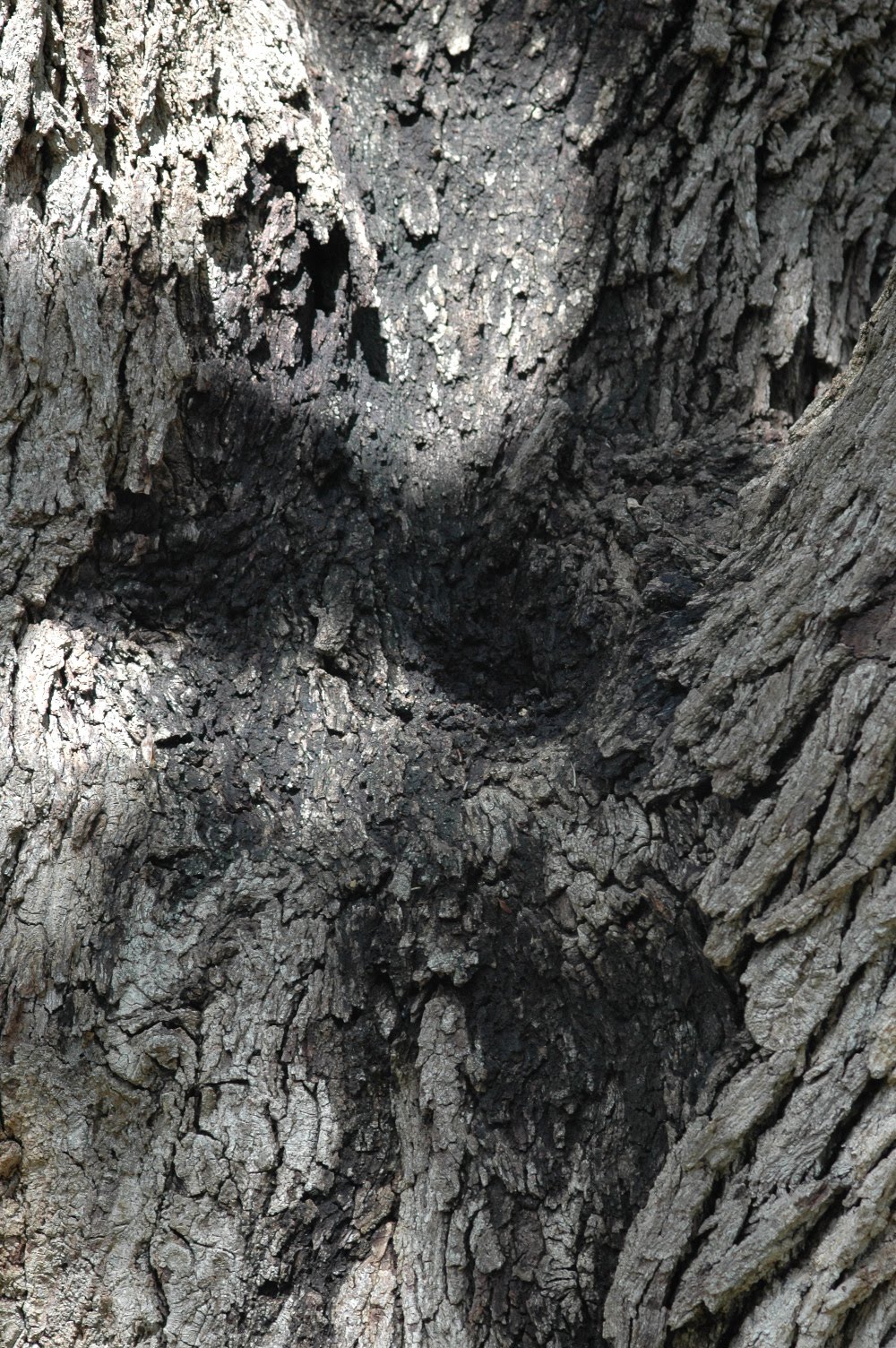
Take a look below at the photos of a HUGE live oak in the back yard. I got worried again and emailed the pics to our local biologist with the Texas Forestry Service: "I'm sending these photos today so you can look at them when you have time next week. I just noticed THESE awful looking black areas on a different OLD OLD OLD live oak in our back yard. The butterflies are "puddling" at a spot at the base. You already told them that was normal and okay. But these areas have me worried."

Robert Edmonson wrote back yesterday: "It is not a problem. A bacteria is living in the tree and produces that “ooze” just going through its life processes. It is NOT fatal to the tree, it’s really NOT even harmful to the tree and there is NO treatment, plus it’s a food source for butterflies and other insects. Try to ignore the “ooze” and enjoy the butterflies. I understand it is unsightly, it makes a mess and it does smell but it’s not hurting the tree. If I haven’t convinced you, you can hire an arborist to come out and take a look. You can find certified arborists at www.treesaregood.org. I’m just trying to save you some money as an arborist will tell you the same thing as I have."

So again, I feel better about our beautiful live oaks. I just couldn't bear it if we ever lost them.


The rebirth of a cicada


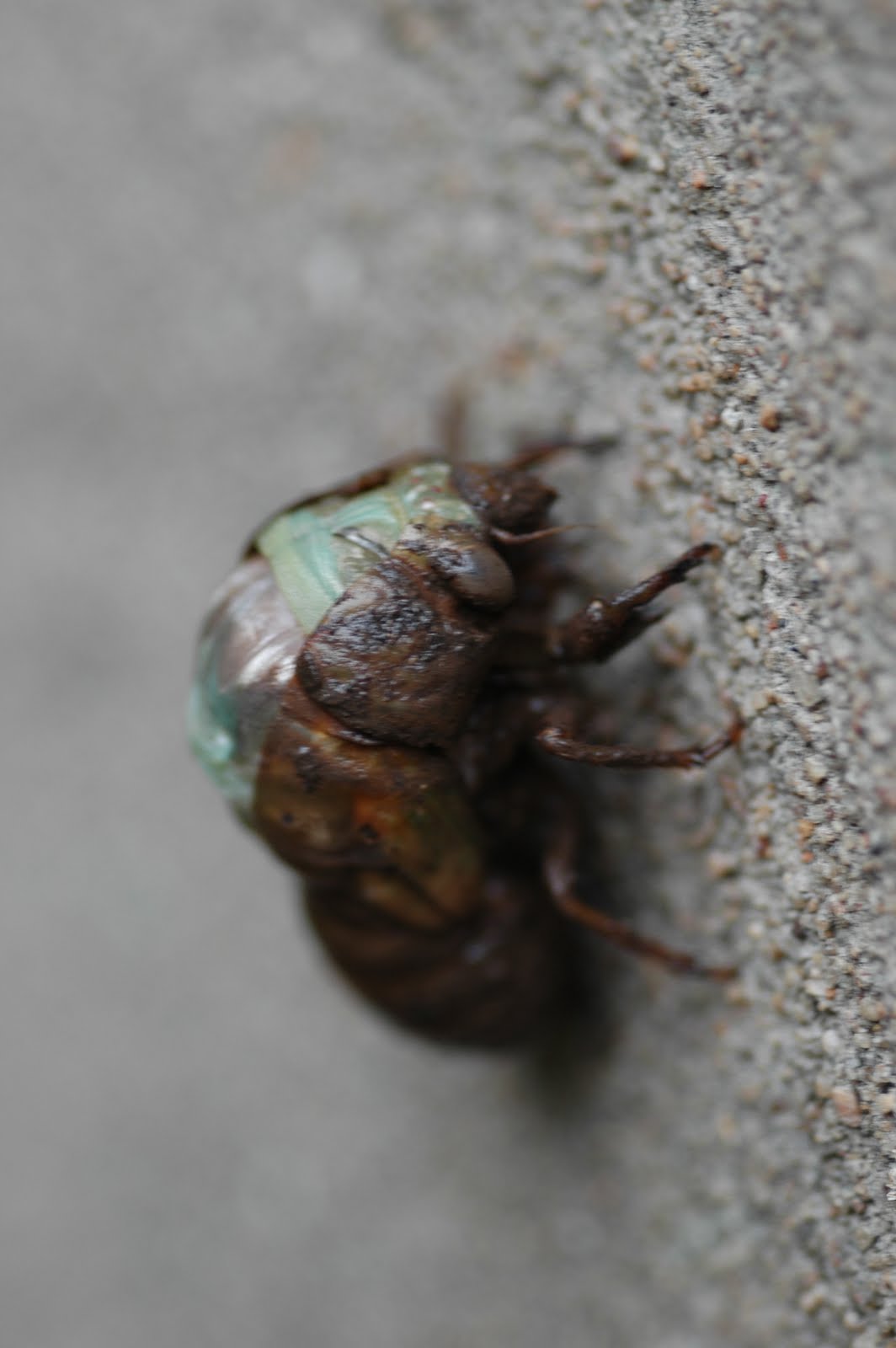
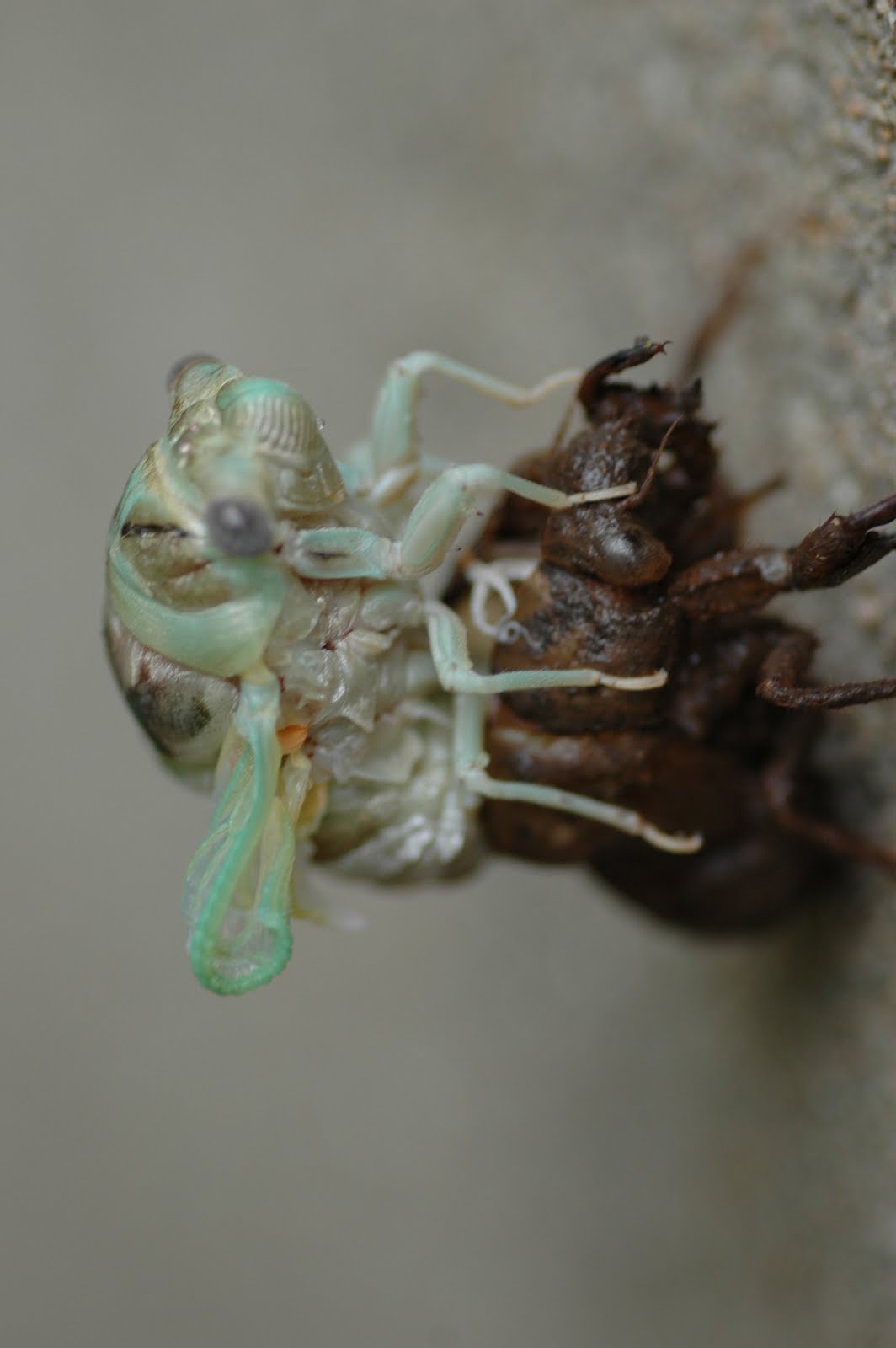
I have always wanted to shoot the emergence of a cicada from its pupa. This morning, I happened to notice one crawling slowly up the outside wall of our house by the back garage door. Though the weather was drizzly and gray, I decided to commit to the project. So while the rain fell, I clicked away as the cicada slowly came out. Just as it finished, the rain POURED, which sent me back inside the garage fast. The roof eave mostly kept me dry during the half-hour shoot, but I still got dripped on.

The emergence started with a tiny crack on the topmost, backside of the pupa. I didn't get back with my camera soon enough to shoot that. Also, keep in mind that the cicada is working on a vertical plane. Every now and then, it would tremble and shake slightly as it strained to get out...


The eyes are coming out...


Now the legs and wings....


Stretching its legs...

Preparing to latch onto the shell...


Latching on!

It's time to GET OUT!

The cicada moved very quickly during this sequence....


It's OUT!


I checked on the cicada later and shot this photo below.............

More photos about two hours later...


Tibicen resh

TA-DA!