Saturday, August 18, 2012

Exciting news on the spider front!

James forwarded me a link yesterday with some exciting spider news. Well, it's exciting if you love spiders like I do. Here's the scoop..."New family of spiders found in Oregon cave," reports Jeff Barnard with the Associated Press:

GRANTS PASS, Ore. (AP)—Amateur cave explorers have found a new family of spiders in the Siskiyou Mountains of Southern Oregon, and scientists have dubbed it Trogloraptor— Latin for cave robber—for their fearsome front claws.

The spelunkers sent specimens to the California Academy of Sciences in San Francisco, which has the West Coast's largest collection of spiders. Entomologists there say the spider—reddish brown and the size of a half dollar—evolved so distinctly that it requires its own taxonomic family—the first new spider family found in North America since the 1870s.

Click the link above and read the rest of Barnard's article!

Wednesday, August 15, 2012

Look what I spotted!


One of the reasons I really wanted a stock tank pond was because of what I'd seen hovering around one at the Lady Bird Johnson Wildflower Center: dragonflies! Since we put our tank together last May, I hadn't seen dragonflies or damselflies hanging out near our pond. Just a few cardinals, white-winged doves, red wasps and paper wasps. Lots of paper wasps. And then....

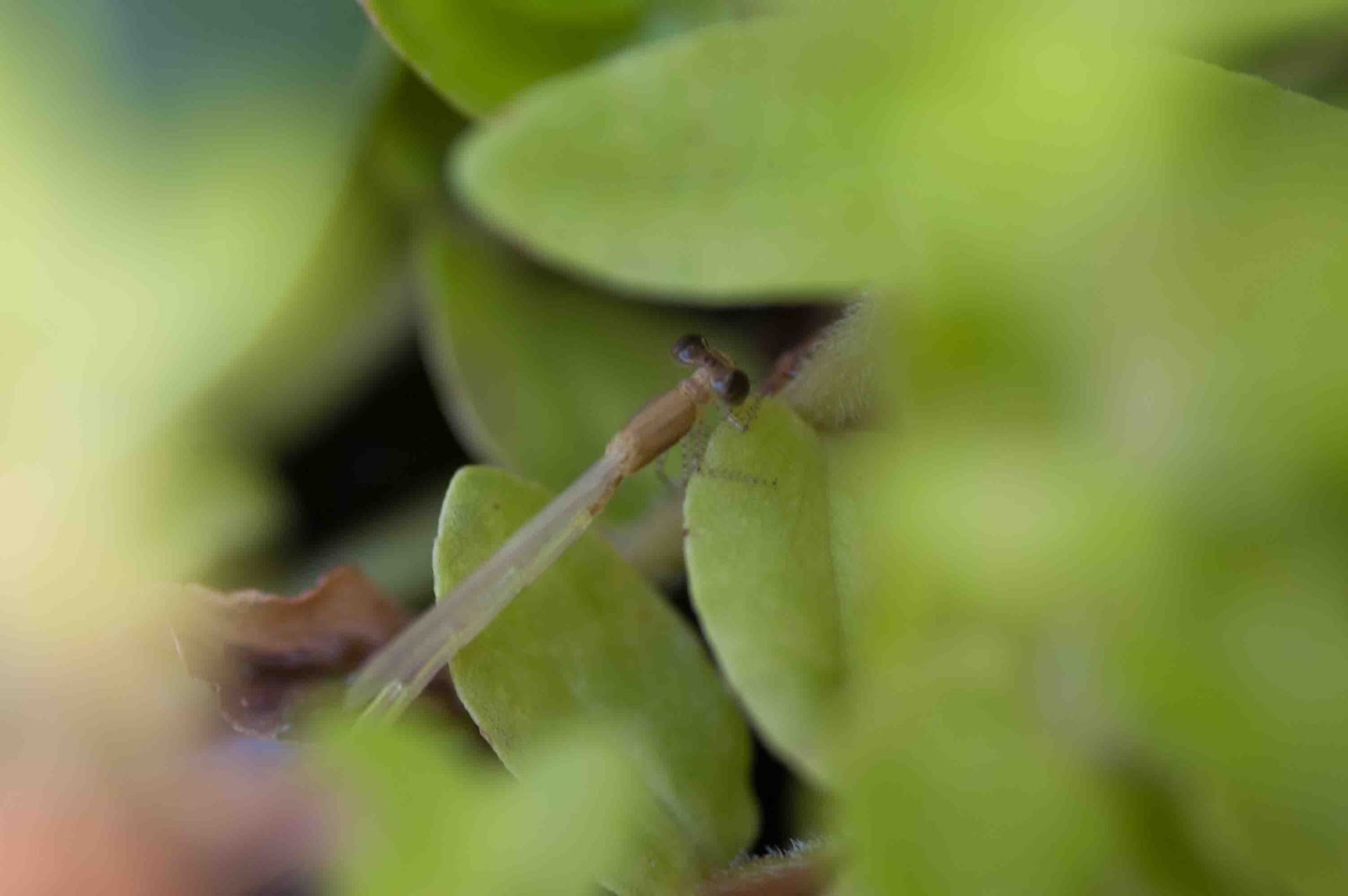
Right before supper this evening, I was out feeding the fish herd and pulling out dead leaves when I startled a...what's that?...an infant damselfly! Or more precisely, a damselfly naiad. I think it'd just emerged! Isn't it CUTE? Like mosquitoes, damselflies lay their eggs in water.  

According to the AgriLife Extension's online field guide, damselfly "eggs are deposited in emergent plants or floating vegetation or directly into the water. Immature damselflies (naiads) hatch from eggs and live in water. They develop through 10 to 12 immature stages (instars), although there may be more or fewer instars depending on the species and habitat. The last immature stage crawls out of the water onto vegetation before the adult emerges. Most species have one generation per year."

Caught wet handed!


If I could, I'd spend all day by our stock tank pond, watching the gambusia and peering into the water. After lunch today, James caught me out there, visiting with my herd of minnows and cooing at the babies (which just keep increasing in numbers). Everyone's always so excited to see me. I feed them a few fish flakes twice a day, but surely THAT'S not the reason they all come running when I appear. Right?

Monday, August 6, 2012

Cicada capers


Cicadas emerge from their pupae everywhere and anywhere. They're not picky. Check out these photos from our Wildscape. Also, see one emerge bit by bit in my July 30, 2010, post "The rebirth of a cicada."


Friday, August 3, 2012

Wandering through the Meadow


Look what I spotted on the purple milkweed vine! A monarch caterpillar! But wait a minute...it can't be. Once I started looking a photos of Danaus plexippus caterpillars, I realized I was wrong. For one thing, this child has red tinges of color, which monarch caterpillars don't have. A little nosing around on the Internet, and I found the answer: it's a queen (Danaus gilippus)! 
Another clue: Monarch caerpillars have two sets of tubercles (those antenna-looking appendages) and queens have three. 
I guess it's been a LONG time since I've seen a queen caterpillar. Cool!
Texas bindweed (Convolvulus equitans)
Waiting for help from Jerry Stacy, a fellow Texas Master Naturalist, for the ID of this mystery plant. Aren't the tiny flowers sweet?
UPDATE–What a sleuth! Jerry figured out my mystery plants: Knotweed leaf-flower (Phyllanthus polygonoides). How'd you do that, I asked him. "A big book. Flora of North Central Texas," he wrote back. That IS a BIG book! I've seen it! Thanks, Jerry!
Carolina snailseed (Cocculus carolinus)
I've seen this plant for years and always ignored it. In my email, I asked Jerry if he could ID it, too. "Looks like prostrate euphorbia," he wrote. "Ground spurge." He's right! Euphorbia maculata is "a late-germinating, low growing, mat-producing summer annual," according to Michigan State University's Turf Weeds.net. Another mystery solved! Thanks, Jerry!

Commander Ben visits

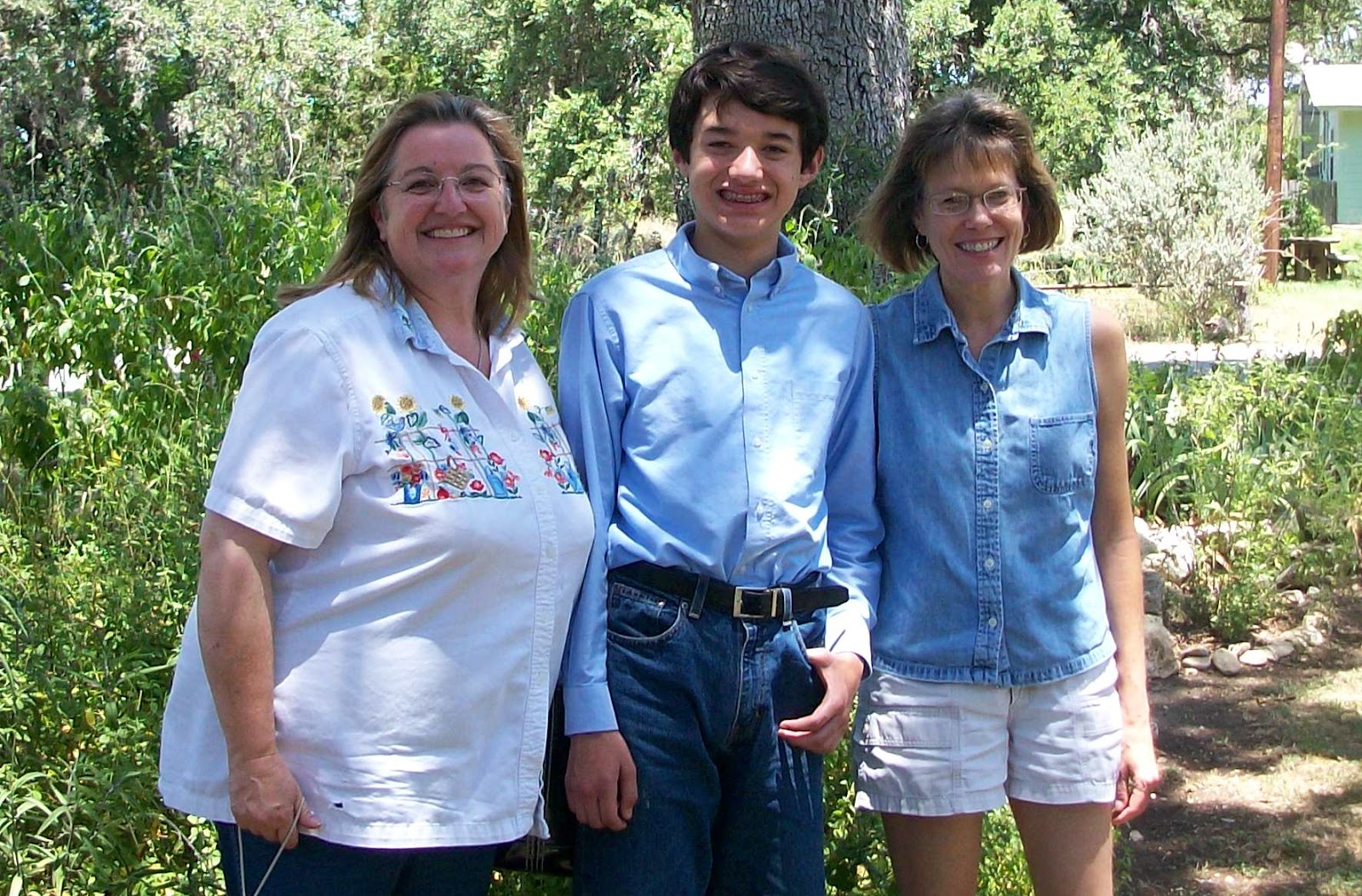
Yesterday, James and I hosted Commander Ben and his mother, Mary, for lunch. I first learned about this amazing young man when I happened upon his website a few months ago. We met in person last month at a Nature Night at the Lady Bird Johnson Wildflower Center. He's only 13 but so passionate about fighting invasive plants and animals in our natural habitats. He's also very interested in all sciences and love animals of all kinds. Check out his "Commander Ben, Invasive Hunter" episodes and other videos on YouTube. Oh, yeah, you can bet I'm writing him up! 

Monday, July 23, 2012

Fire preparedness

A Texas Master Naturalist with our Highland Lakes chapter recently posted a timely link on our newsgroup: Prepared. It's a site hosted by the City of Austin, Austin Fire Department and the Texas Forest Service about getting your home wildfire safe. You do have to sign up for an account, but any and all tips have to be worth the time.