Saturday, October 6, 2012

Franklin Mountains State Park

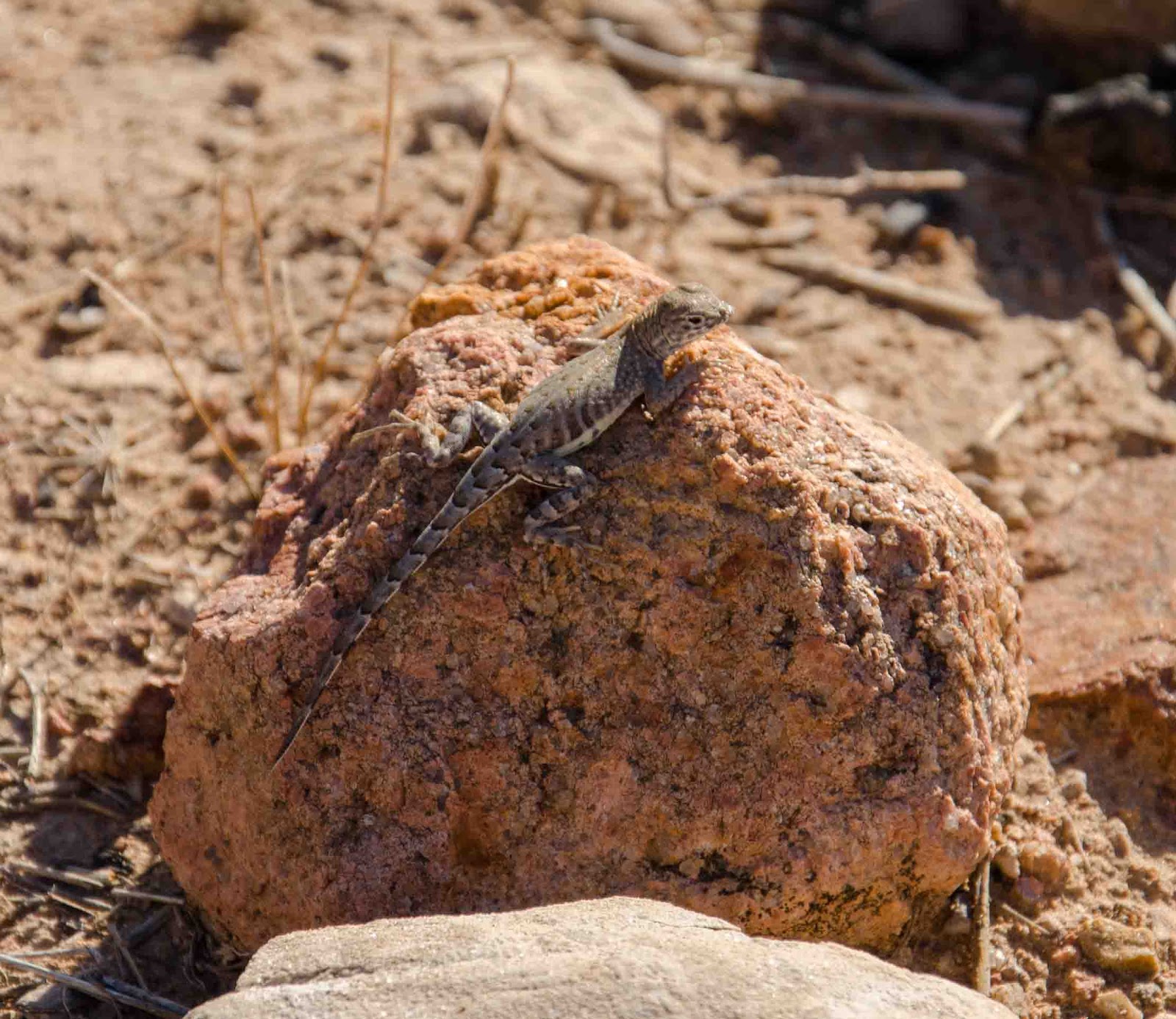
This past week, I flew to El Paso for an overnight assignment. Since I had a free afternoon, I headed for the Trans-Mountain Road/Loop 375 north of downtown and spent about an hour looking around and hiking a nature trail at Franklin Mountain State Park. Beautiful scenery!


Saturday, September 29, 2012

Tiny pink

Awhile ago, I went outside to check on the Wildscape after last night's rains and spotted this tiny moth (approximately 3/8 inches) nearly camouflaged on a salvia bloom. Had to go get my camera, of course. I believe it's a southern pink moth, also called inornate pyrausta moth (Pyrausta inornatalis).

Great day to be a bee!


It was a challenge, but I snagged a few photos of this busy guy (Anthophora sp.), gathering pollen among the salvias.


Found treasure!


At least to me, I've found treasure right in our Wildscape. 

We'd been letting this little plant grow in a back-yard bed. I thought it was cow-itch vine. James was skeptical about letting it stay. As it grew, it branched out like shrub, not a vine. Cordelia, a friend who came by for a garden tour yesterday, shook her head and said no, it definitely wasn't cow-itch. I agreed and peered closer at it. Then what the heck was it?

I took a photo and sent it to plant expert Jerry Stacy with our Highland Lakes chapter of the Texas Master Naturalists. "That's aromatic sumac," he replied. "It will be a pretty shrub that provides great bird food."

AWESOME!

According to the Lady Bird Johnson Wildflower Center's Plant Database, Rhus aromatica is larval host for the banded hairstreak (Satyrium calanus) and red-banded hairstreak (Calycopis cecrops).

"In spring, fragrant sumac flowers appear before the foliage," the account states. "This shrub turns fall colors of red, yellow and orange. The flower is a nectar source for adult butterflies. Fragrant sumac colonizes to form thickets and looks best when planted en mass or in drift-like plantings as it occurs in nature. It is fast growing, generally pest and disease-free, and drought-tolerant. Colonies are often single-sexed, formed from a single, suckering parent. Only female plants produce flowers and berries."

Oh, please be a female! Please please please!

Thanks, Jerry! I love finding treasures in our Wildscape. 
 

An elegant roach

Last night's rains blessed us with more than 3 inches! Not to mention this interesting insect that's presently latched onto an exterior wall of our garage. I spotted a smaller one, too....


I checked with Bugguide.net, and the insect appears to be a Boll's sand roach (Arenivaga bolliana). A little further Googling led me to Insects of the Texas Lost Pines, which says that this species occurs only in Texas. "Boll's sand cockroach is the largest and most commonly seen cockroach of the forest," the book states. "A better common name would be the 'elegant roach.'"


The species does NOT infest homes and is not considered a pest, my dear James.  :-)