Monday, September 17, 2012

Yard art, lichen-style

Wow, isn't Mother Nature TALENTED??!!


Tuesday, September 4, 2012

Butterfly beauty

While eating our sandwiches at lunch today, I spotted a beautiful giant swallowtail nectaring in our back yard. Later, James spotted a second one. Aren't they a gorgeous species?


Monday, September 3, 2012

Old man's beard

Drummond's clematis (Clematis drummondii)
Back in my former life, my former husband would often point out this vine to me when we traveled Texas highways. I didn't pay much attention. In those days, native species didn't interest me like they do now. It was just another ol' plant. But I remember him telling me, "There's some old man's beard!" Now I think the vine is one of the coolest native plants, and I WANT SOME! Today, James and I drove out in the country, and he stopped so I could pick some seeds from some growing on an old fence. I had to try and shoot some photos first. Isn't it beautiful? Old's man beard is related to the purple clematis, which also has a fluffy seed head.


NOTE TO SELF: Today, September 28, 2012, I "planted" these seeds along an old barbed wire fence on the west side of our property. 


Purple and yellow in our Wildscape

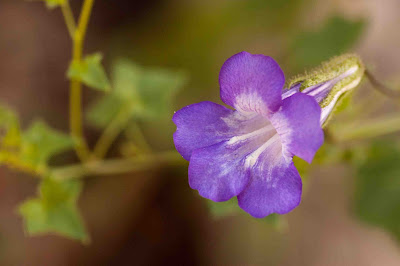
Climbing snapdragon vine (Maurandella antirrhiniflora)

Black dalea

Cowpen daisy (Verbesina encelioides)
Common sunflower (Helianthus annuus)
 

Wednesday, August 29, 2012

Why Native Plants

Among the nature-related books I've bought in the past year or so is Bringing Nature Home: How Native Plants Sustain Wildlife in Our Gardens by Dr. Doug Tallamy. Recently, a friend emailed me a link to Dr. Tallamy's brief video entitled "Why Native Plants." It's only 4 minutes long and well worth a watch!

Live webcast from Bracken Bat Cave next month

Hey, y'all, this sounds really cool via BatsLive.....

A live electronic field trip will be held on September 18 at the Bracken Bat Cave near San Antonio, which is the summer home of the world's largest bat colony. As millions of bats emerge from the cave, watch the live program from 7 to 8:30 p.m. ET. 

With millions of Mexican free-tailed bats living in the cave from March through October, Bracken holds one of the largest concentrations of mammals on earth. The emergence of these millions of bats, as they spiral out of the cave at dusk for their nightly insect hunt, is an unforgettable sight. For more information about Bracken Bat Cave on the Bat Conservation International web site, CLICK HERE. Be sure to check out the spectacular video. Learn about: the Mexican free-tailed bats of Bracken Cave and other bat species, predators that wait for their nightly emergence, threats to bats including White-nose Syndrome, how you can help these beneficial creatures, how bats navigate using echolocation, cave ecology and more.

Watch the May 17 Webcast for Students
BatsLIVE: A Distance Learning Adventure was webcast live on May 17, 2012. CLICK HERE to watch the program. 

Tuesday, August 28, 2012

A ladybug and other stuff

Harmonia axyridis
I try to photograph every ladybug we find in our Wildscape so we can submit a report to the Lost Ladybug Project at Cornell University. This is a multi-colored Asian ladybug, an introduced species from Europe. So far, I've contributed 20 images to this research project.
Matelea biflora
Speaking of research projects, I submitted these photos of a purple milkweed vine seedpod (with common milkweed bugs below) and a prairie verbena going to seed to the Lady Bird Johnson Wildflower Center's Image Gallery. 
 

Glandularia bipinnatifida
A cool fly...working on ID.
One lone oxblood lily blooming!