Tuesday, June 3, 2025

Dung beetle mania!

Yesterday evening, a neighborhood white-tailed deer left a nice deposit of pellets in our front yard. It wasn't long before a gaggle of dung beetles showed up and got to work. These were female Texas black phanaeus (Phanaeus texensis). This turned out to be our evening's entertainment, watching the beetles crash land and then rush over to the pile. They tussled and fought over each other's dung balls. How do they find poop? According to the San Diego Zoo, they use specialized antennae to detect dung aromas from the air.

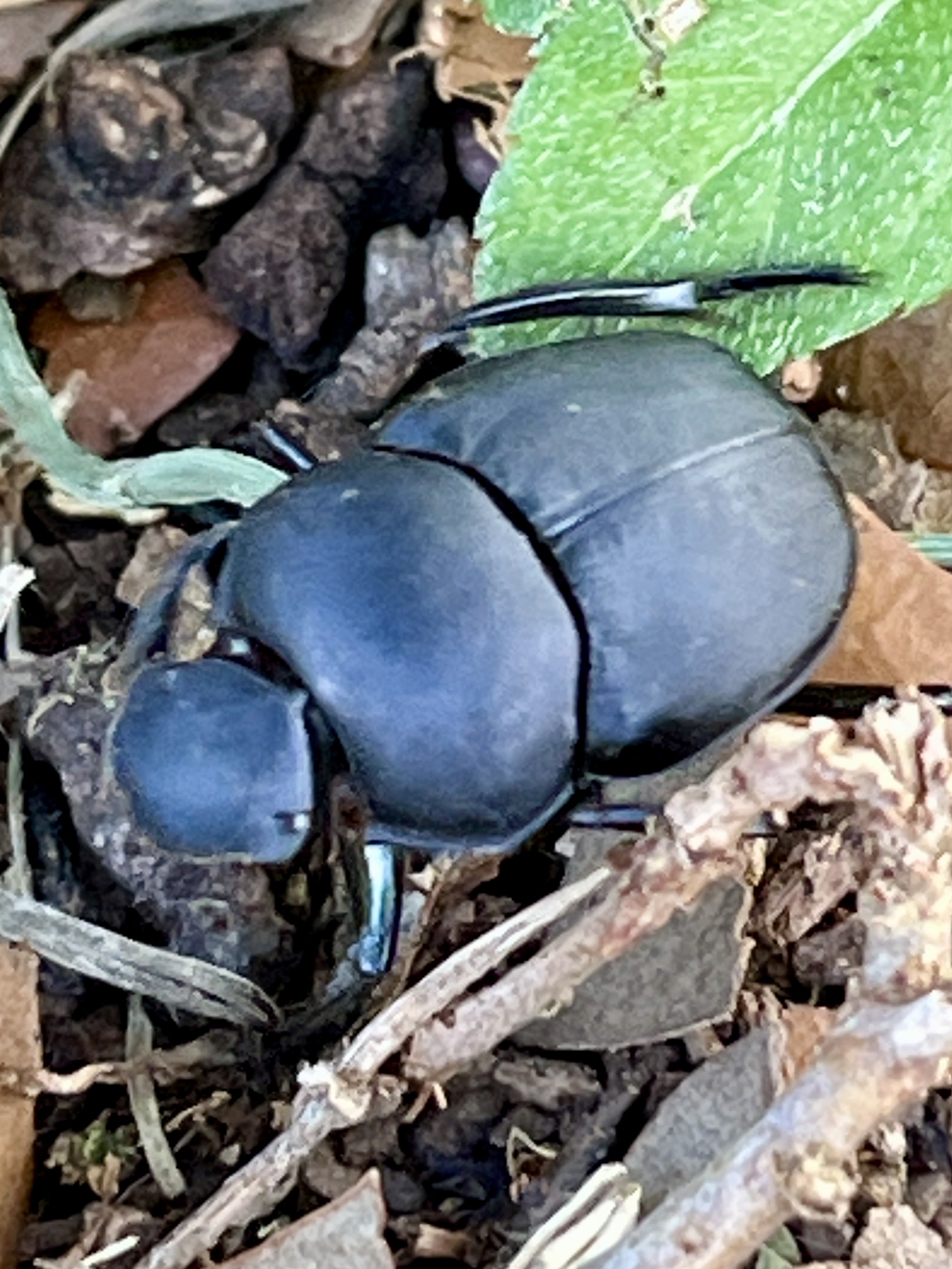


James took this video (above) last month on our rural property. He filmed (and bothered) quite a large crowd of dung beetle girls! 


Monday, June 2, 2025

Paper wasp dismantles an orbweaver

Right time, right place. That was me yesterday evening. Not so for the poor.... well, let me tell you what happened....

I was headed for the Meadow to check on my antelope-horns milkweed pods.  Then -- PLOP! -- a fine-backed red paper wasp (Polistes carolina) landed right in front of me on the street. Naturally, I crouched down for a better look. The wasp had an orbweaver in its clutches. Poor spider, but that's nature. I pulled out my phone for a couple of photos. When I realized the wasp was gnawing on the spider, I started videoing. 

Oh, my goodness, the wasp was amputating the spider's legs! This made me remember the mud-nesting wasp I found in April with a wolf spider. Its legs had been amputated. These two cases of amputation by a wasp are a first for me. And from the little I read about the red wasp, this species typically hunts caterpillars, not spiders. If you want the videos, you'll see ants carrying off the spider's legs. The last video shows the wasp flying up, up and away, carrying her victim. 


Saturday, May 31, 2025

New additions (and a pop-up)

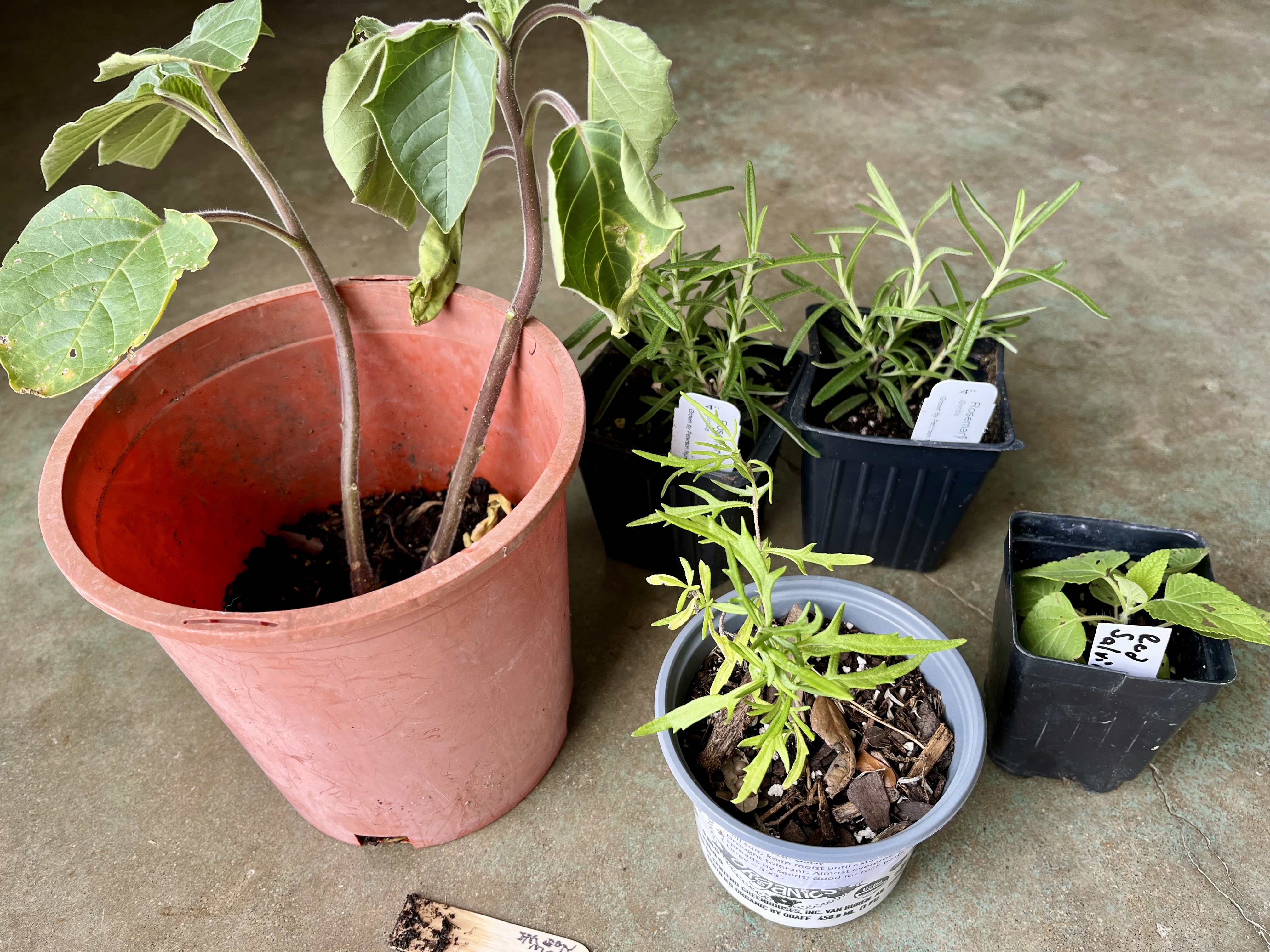
Here's what we brought home from the Festival of Flowers in San Antonio: Jimsonweed (Datura wrightii); skeleton-leaf goldeneye (Viguiera stenolaba); red salvia (Salvia coccinea) and two rosemary plants (latter complimenets of SAWS). 
I chose the moonflower because ours that we bought and planted back in April 2014 finally pooped out a couple of years ago. This afternoon, I walked over to the garden spot in our front yard where I thought we'd plant its replacement. What should I see? A new jimsonweed child! How cool! Nature is just amazing. 

Festival of Flowers!

What fun! At nearly the last minute this morning, we braved the traffic and hopped on down to San Antonio for the 25th annual Festival of Flowers. We'd never heard of it before. But thanks to a Facebook post I saw by our gardening friend Shirley Fox, we checked out the online info and decided to go. (Free parking and $10 entrance fee  at the San Antonio Shrine Auditorium.) Here are some of the nice folks we met. Of course, we came home with a few plants.
Our friend, Shirley Fox 
 
Brothers Mike and Mark Fanick with Fanick's Garden Center

Donald Gerber and employee with Pollinatives

Publisher Jay White with Texas Gardener (I've written for the magazine in the distant past.)


Tuesday, May 20, 2025

Two new additions

I bought two pots of tall aster (Symphyotrichum praealtum) from the Blanco County Master Gardener plant sale last month. Suzanne C. gave me another a pot (far left), but I don't think it's tall aster. We'll see. They're all planted behind the new high fence.


Thursday, May 15, 2025

iNaturalist milestones


Look! I'm at 1,470 species and 6,000 observations, of which the majority by far have been in our yard!


Wednesday, May 14, 2025

Catocala caterpillar nabs attention on iNaturalist

Well, not a LOT of attention. But some on iNaturalist! Most notably by Larry Gall, a systematist and field biologist in Connecticut who works at Yale University's Peabody Museum as the senior collections manager for the entomology department. I posted this observation in April 2020 and only took one photo. I think we had an abundance of caterpillars that spring so I didn't take multiple pictures of just one. 

From what I'm gleaning from the conversation posted to this observation, this caterpillar could be the larva of one of two species – Catocala delilah or C. desdemona. Few larvae of both species have been documented. I've been asked to rear one if I ever see this caterpillar again, which I'll gladly do given I have some guidance. 

Here's a cool guide that Gall and his colleagues have compiled: Underwing Moths (Catocala) & Larvae: A companion guide for iNaturalists.