Saturday, June 23, 2012

This and that


We planted two calylophus (Calylophus berlandieri) in April 2009. They've bloomed every year since just beautifully. But now they're dying back, which saddens me. I thought I'd take a picture because I can't remember if the plants did this last year. I'm hoping! Because I'd hate to see them go.
What I once considered a pesky weed is NOT. The common sunflower (Helianthus annuus) has very pretty flowers and is a host plant for the silvery checkerspot (Chlosyne nycteis). See my July 7, 2010, post.
However, common sunflowers are GIANTS in the garden!
James found a little frog yesterday. We can't decide if it's a Rio Grande leopard (Rana berlandieri) or a southern leopard (Rana sphenocephala). 

Passionflowers, native and otherwise

I'm SO SO SO excited! Look! A native yellow passionflower (Passiflora lutea) blooming! A month or so ago, I spotted the tiny vines growing beneath a live oak on my neighbor's adjoining property. I'd been watching one plant, hoping it'd bloom because I've never seen one. Yesterday, I checked...it was in flower! As you can see, the blossom is no bigger than a penny. It's so delicate and beautiful. 
 

Our other passionflower vines are blooming, but they're not native. They're beautiful, just the same, though.

Thursday, June 21, 2012

Watch out for this bug

Today's edition of the San Antonio Express-News has a report about a dangerous parasite carried by certain species of kissing bugs: Chagas disease carrier may be threat in Texas.

"For years, scientists have known that the sweetly named kissing bug found throughout South and Central Texas carries the parasite that causes Chagas disease, a major killer in parts of Latin America," reporter Don Finley wrote."What wasn't known is if those Texas bugs infect people, although they clearly infect animals — including bomb-sniffing dogs at Joint Base San Antonio-Lackland and nonhuman primates at the Texas Biomedical Research Institute."

According to the article, "five species of triatoma bugs found around San Antonio carry the infection, the most common of them Triatoma gerstaeckeri — a flat, dark brown teardrop-shaped bug with lighter stripes mostly obscured by its wings. Adults are often more than an inch in length."

Chile pequin

The peppers are turning RED on our chile pequin bushes.

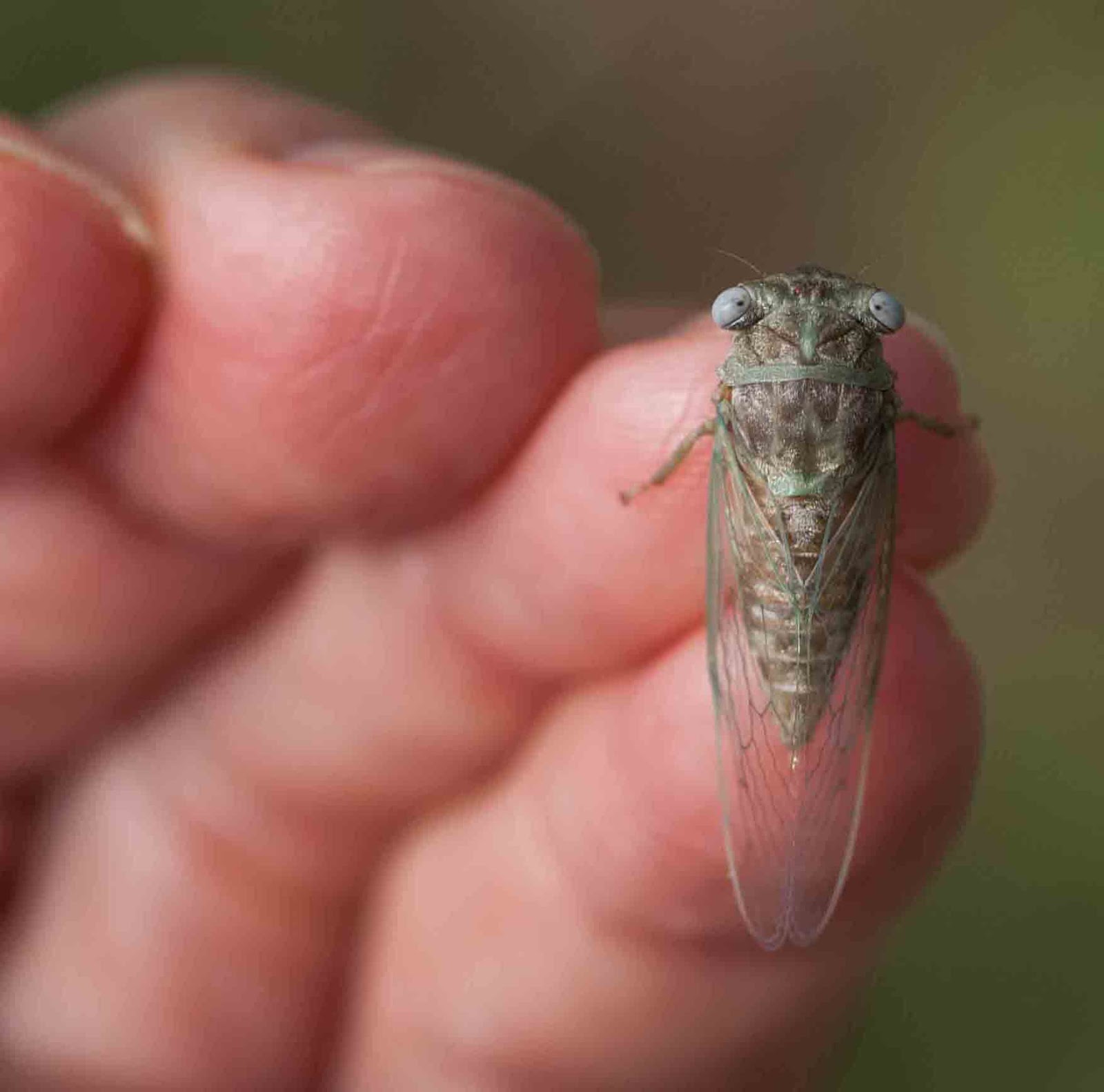
Mini cicada


I was outside yesterday afternoon, nipping off dead flowers, when I felt something land on my foot. I looked down and found this little cicada. I caught it in my hand, then walked into the house for my camera. Back outside, it posed patiently for numerous shots. Then it flew off.
Entomologist Mike Quinn says it's likely a grasslands cicada. Maybe Cicadetta texana? Bill Reynolds via Bugguide.net says it's a mesquite cicada (Pacarina puella). Either way, it was CUTE. I've never seen a cicada that tiny before.

Wednesday, June 20, 2012

A butterfly and bromeliad

A queen resting on what's left of a blue mistflower.
Our bromeliad's blooming again! Our neighbor Jerri gave it to us as as wedding gift in May 2006.

Monday, June 18, 2012

What's blooming and chirping


The rock roses are spectacular right now.

While I was shooting the rock roses, a trio of young Carolina wrens were bug hunting on the ground and up the brick wall of our house. When I turned my camera on one, I got a nice photo of one curious little guy. 
We have so many young birds in our Wildscape right now. One particularly LOUD teenaged mockingbird screeches nearly all day for his parents to feed him. A pair of cardinal parents stay busy tending their kids, too.

The flame acanthuses are blooming. Later this summer, maybe we'll get more crimson patch caterpillars to host on the leaves.
A couple of views of our back yard, complete with the stock tank pond.